
Standard Operating Procedure
The three-phase operation, in detail.
01
Preposition
MCRC units are placed in strategic geographical locations nationwide, sized to population and each region's projected needs.
Units are maintained by a combination of the private sector, military, and National Guard. Every unit has an assigned crew to service, operate, and deploy it at any time—with all supply logistics (gasoline, diesel, water, cash) pre-planned in the MCRC Standard Operating Procedure manual.
02
Deploy
Units roll out ahead of forecasted emergencies—hurricanes, floods, winter storms, wildfires—to pre-determined locations.
They also deploy during sudden natural or man-made disasters—terrorist attacks, power outages, electromagnetic attacks—where rapid response time is the priority.
03
Sustain
Units remain in place, fully serviced, through rescue, recovery, and rebuilding.
MCRCs relocate easily by land or water to meet developing needs, and stay in service until normal conditions have returned.
The Hurricane Playbook
A unit every 15 miles along the evacuation route.
Before
During
After
Digital billboards run public-service announcements in English and Spanish throughout.
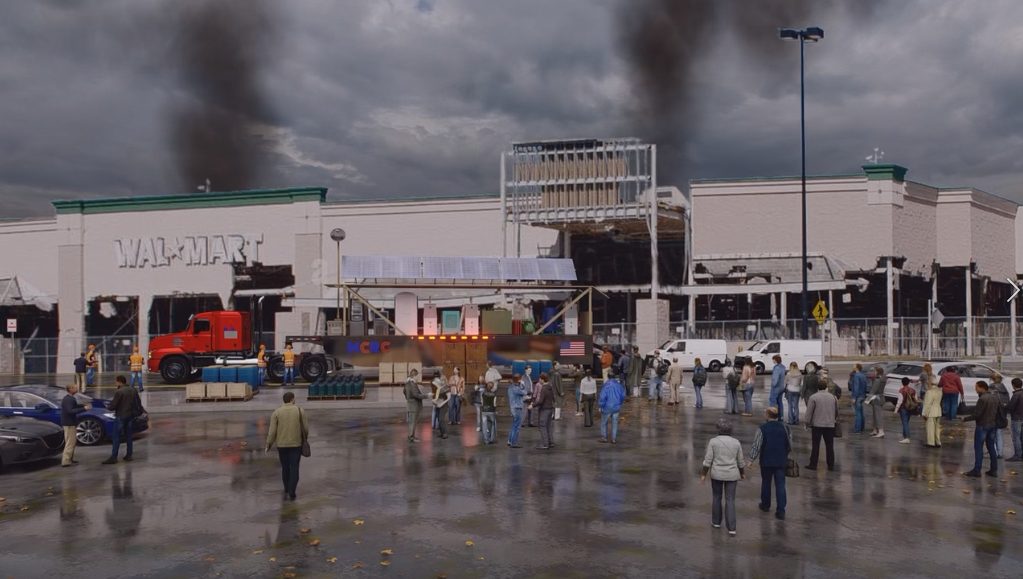
After the storm passes, units stay—or redeploy by land and water—serving emergency workers, first responders, utility contractors, and those who chose not to evacuate.
This continues until ‘normal’ conditions return.