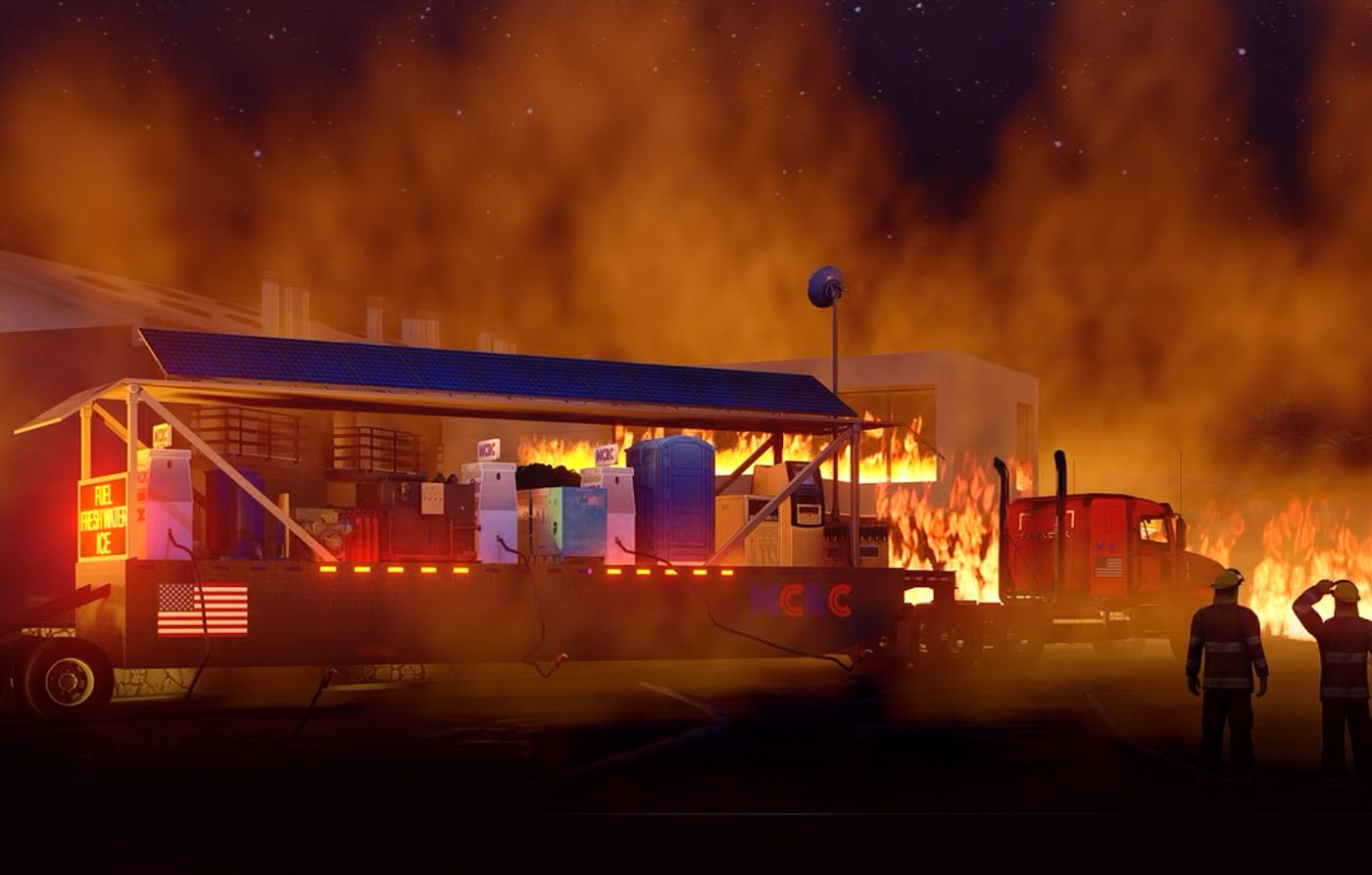
Stored ready. Deployed in hours.
MCRC units are stored indoors ahead of any natural disaster or national crisis, then deployed rapidly to provide relief to the general public—and critical support to emergency personnel, military, first responders, and utility contractors.
Each unit is towed by a military Heavy Expanded Mobility Tactical Truck (HEMTT) or a big-rig tractor such as a Mack or Peterbilt.
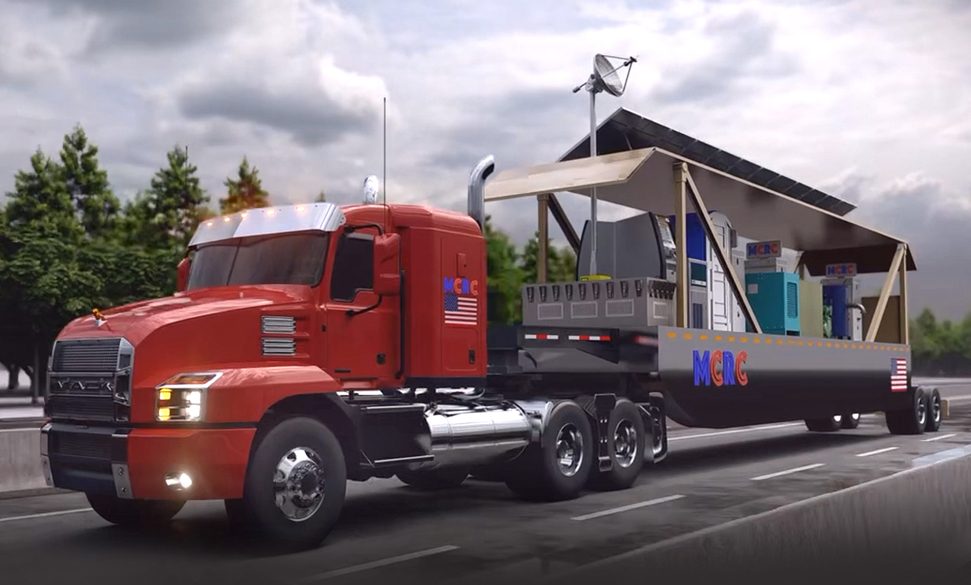
Two Base Models
Trailer or floating barge—customized to the threat.
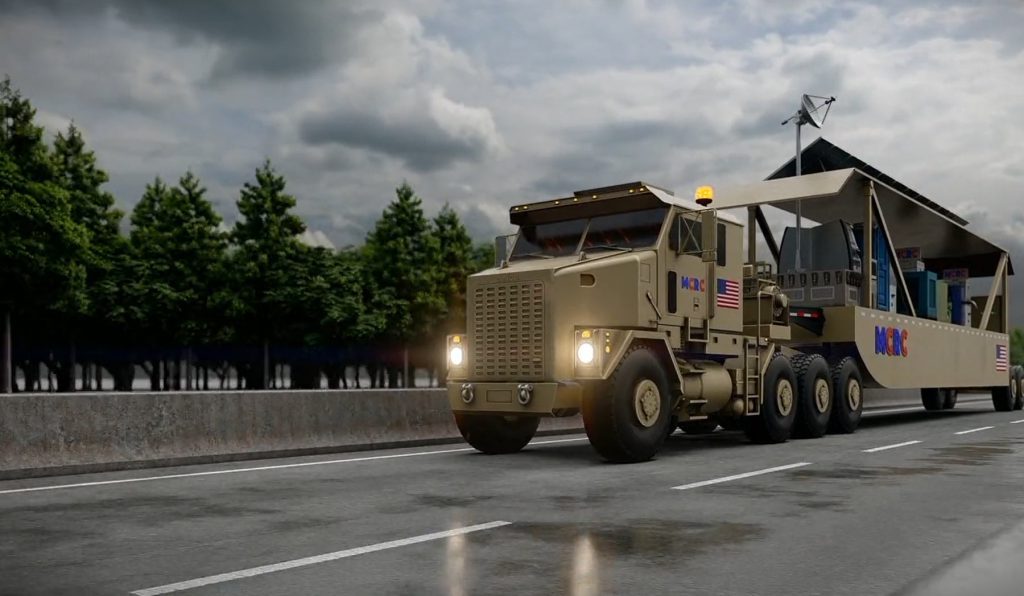
Base Model 1
Trailer System
The non-floating workhorse. A patented 10′ × 50′ trailer stationed along evacuation routes, in parking lots, and at recovery sites—anywhere wheels can reach.
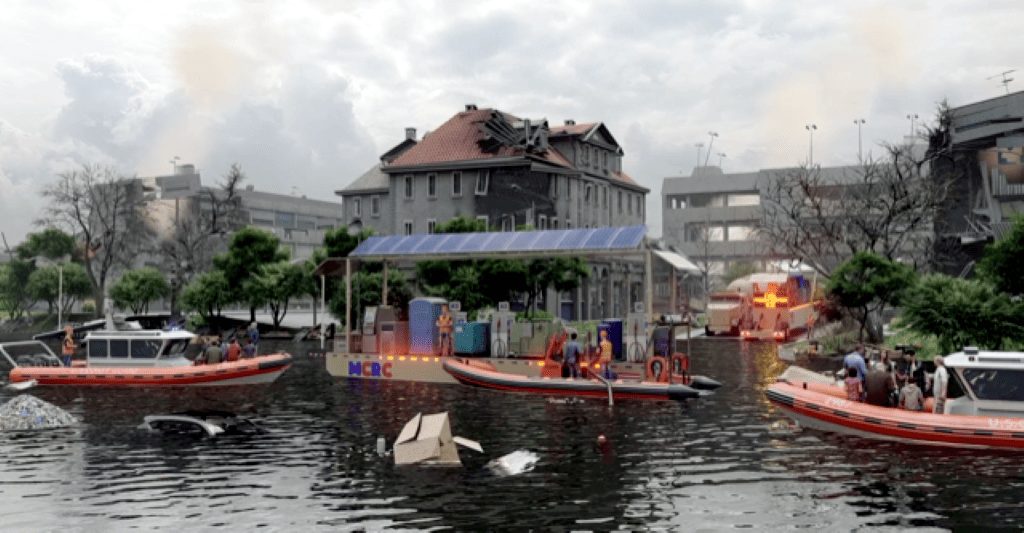
Base Model 2
Floating Barge System
Everything the trailer carries, afloat. In floods it becomes a rescue dock and supply point for the public, Coast Guard, National Guard, and first responders.
Each unit is customized to geographical location, existing potential threats, and population—so the services on board match the needs on the ground.
Ready for every emergency.
Garrett’s Story
Invented on the ground, not in a boardroom.
Garrett Johnson owns Garrett Johnson, Inc., a heavy highways utility contractor completing millions of dollars of work every year in Virginia. For 30 years he has responded to almost every major hurricane—Andrew, Hugo, Isabel, Ike—running excavators and loaders through the cleanup, and watching what people in crisis actually need.
What he saw never changed:
“Evacuations—it’s always the same thing. No plan, total chaos, price gouging, hours in line for gas… and then the station runs out. Fuel trucks can’t even get through to refill them.”
So he invented the answer: a portable, multi-purpose, life-saving combination of everything most needed in a crisis—generator, ice, oxygen, reverse-osmosis water desalination, fuel pumps, hot coffee and tea, and charging for cars and phones. Patented, and built to be everywhere it’s needed.
“One administration after another gets caught off guard. Let’s change all that. Join me and the MCRC—so next time, we’re prepared to save lives when Americans need it most.”