
Border Crossing Solutions
Infrastructure for the northern and southern borders.
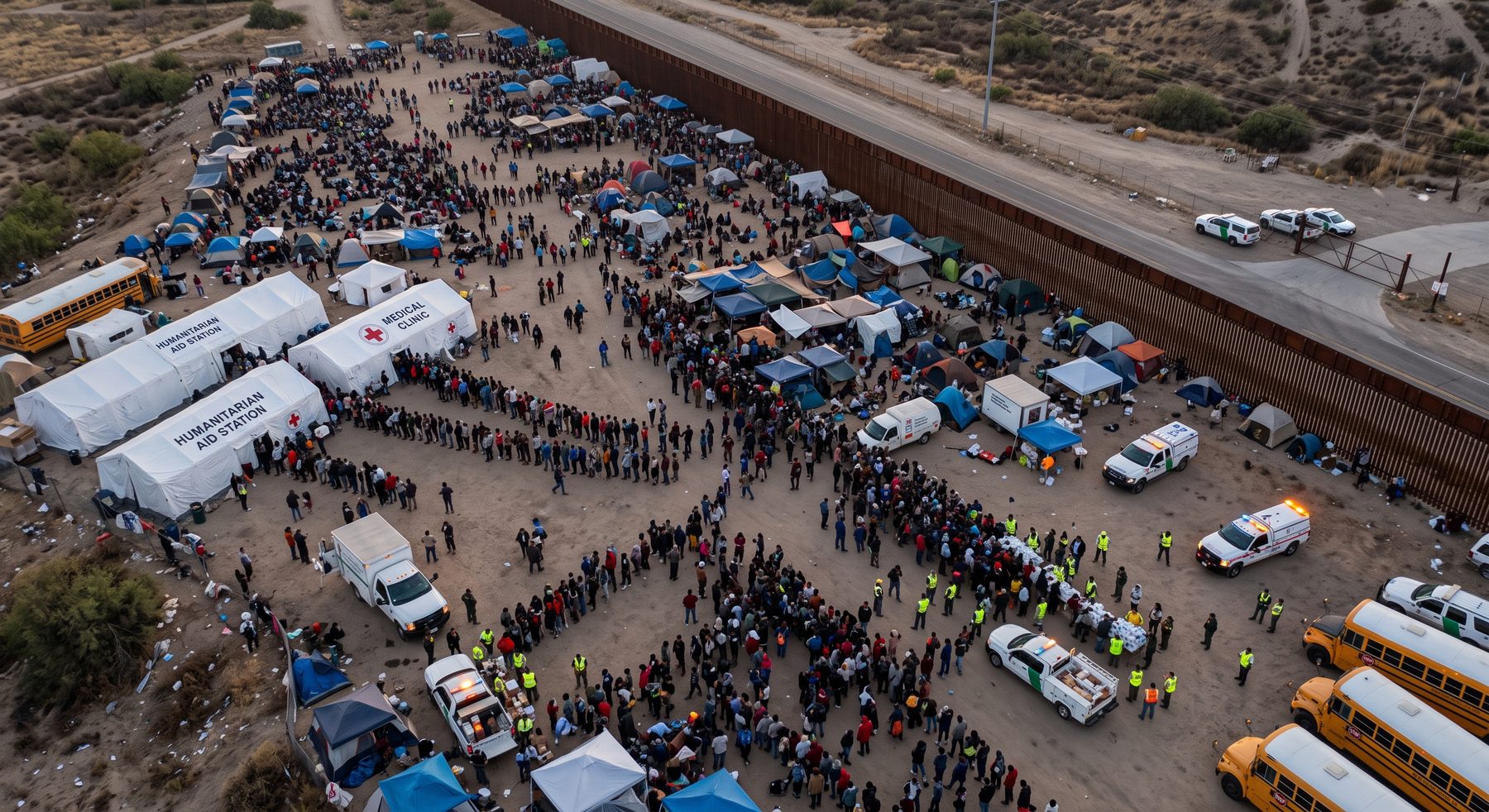
Stationed at key crossing locations, MCRC units give arriving families direct access to water, ice, and first aid—and the ability to contact relatives to say they’re safe.
The same units support the people doing the work: border patrol, law enforcement, medical response teams, and the National Guard—with fuel, communications, and instant cash access through on-board ATMs.
Scenario Briefs
Answers for the questions planners ask.
Natural Disasters
Floods, tornados, earthquakes—how fast can units respond?
Units stored on military bases and with private contractors deploy immediately after a spontaneous disaster, providing aid through the emergency and supporting first responders, military, utility workers, and contractors through recovery.
Storage
Where will MCRC units be stored?
On military bases and in hurricane-proof warehouses around the country—75 to 100 units per site—with a standing crew keeping every unit serviced and ready to roll.
HIDT
Who operates the fleet?
The proposed Homeland Infrastructure Defense Team (HIDT): a new government division, similar to FEMA, of trained personnel on standby to deploy and service units at any moment.
Rebuild Phase
What happens after the crisis?
Units are strategically placed to support community rebuilding—working alongside the American Red Cross and the many organizations that restore an area hit by catastrophe.
Wildfires & Winter
Beyond hurricanes—what else?
After wildfires level a town, during earthquake recovery, or in a frozen highway backup like I-95's 28-hour shutdown: diesel, gas, water, hot coffee and tea, and EV charging keep people alive and moving.
International
Can the MCRC be used internationally?
Yes. The MCRC system is built for both national and international deployment.
Grid-Down Events
Power outages, EMP, and cyber attacks.
EO 14420 restricts foreign-produced equipment across the bulk-power system—the backbone operating at 69 kV and above—citing sabotage and cybersecurity risk. While suspect equipment is isolated, monitored, or replaced, communities still need power, fuel, and communications on the ground. That continuity layer is the MCRC.